
Washington County Arrest Records and Court Charges
Washington County arrest records are created on the law enforcement side when a person is arrested, booked, or tied to an offense report. The Washington County Sheriff's Office and Jail are at the Law Enforcement Center, 301 B Street, and the jail phone is the practical custody channel because no official Washington County Kansas online inmate roster was located in the research. For public booking, bond, court date, or release questions, call 785-325-2293 ext. 1.
Court charges after arrest are different. The charge record starts when the Washington County Attorney files the complaint or information with the court. The Clerk of the District Court then keeps the case record, including the charge, statute, severity level, amendments, plea, disposition, and sentence. For the full case file and final outcome, use Washington County criminal court records. For custody details, use the jail channel instead of assuming the court docket has booking data.
Find Washington County Arrest Records
Start with the right record source. Recent custody questions go to the Washington County Jail. Offense or incident report copies go to the Sheriff's Office, with the research showing a $10 fee for offense or incident reports requested in person during office hours or by written request. Court charges and charge status are searched through Kansas CaseSearch and confirmed by the Clerk of the District Court.
The Kansas Bureau of Investigation registered offender search is a separate public registry for sex, violent, and drug offenders.
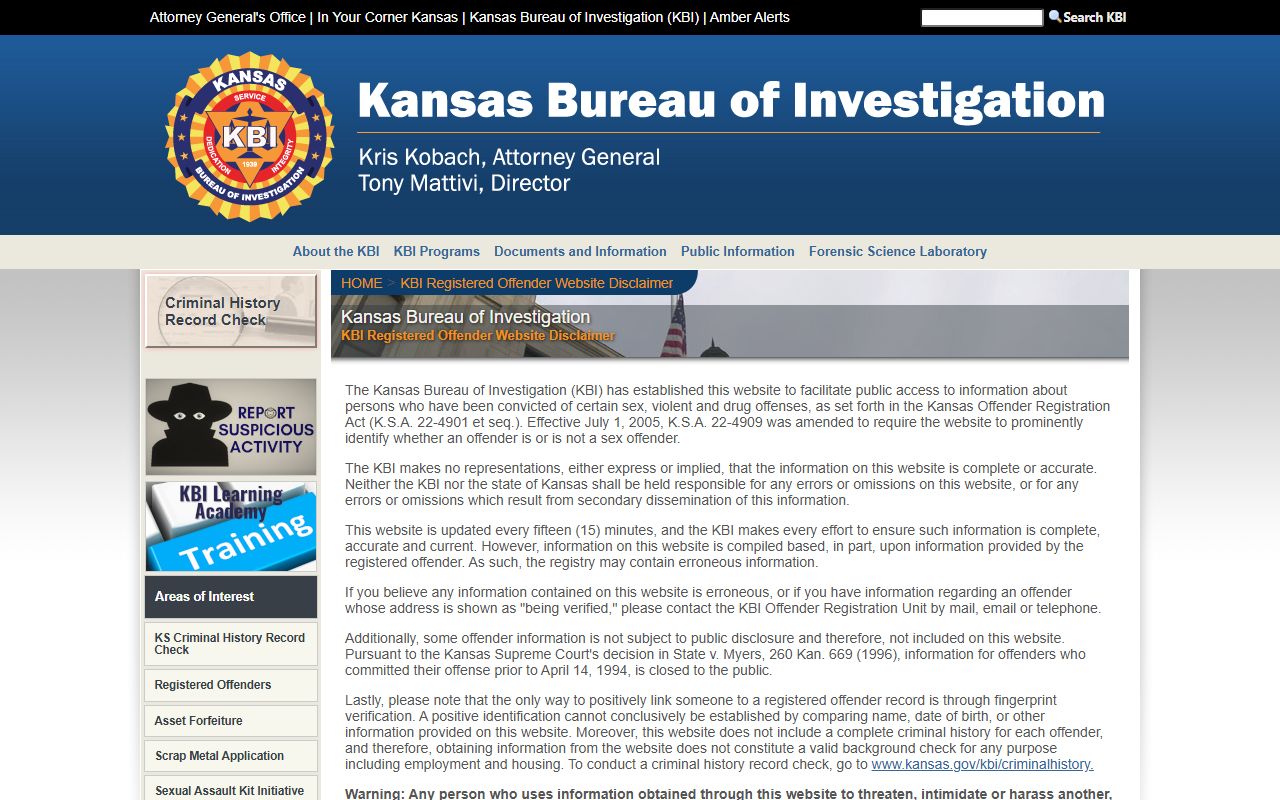
That registry is not a county arrest list and is not a complete criminal-history check, so it should not be treated as the source for all Washington County charges.
- For current custody or booking facts, call the Washington County Jail at 785-325-2293 ext. 1.
- For an offense or incident report, request the sheriff report from 301 B Street and expect the county's $10 report fee.
- For court charges after arrest, search CaseSearch by defendant name, case number, or citation.
- Open the case result and read each charge line, statute, severity, amendment, status, and disposition.
- Request certified copies or full charging documents in writing from the Clerk of the District Court at 214 C Street.
Charges After Arrest Documents
Washington County uses a County Attorney, not a District Attorney title. The Washington County Attorney's Office at 209 C Street prosecutes felony, misdemeanor, traffic, fish and game, and juvenile offenses that occur in the county. It also handles Child in Need of Care cases, care and treatment cases, drug and alcohol commitments, post-conviction matters, habeas corpus petitions, and direct appeals. The charge record begins when that office files the charging document with the district court.
| Document | Filed By | What It Does |
|---|---|---|
| Complaint | Prosecutor, often based on law enforcement facts. | Starts many criminal cases and states the alleged offense. |
| Information | County Attorney. | Formal charging document used by prosecutors in criminal cases. |
| Indictment | Grand jury. | Formal accusation returned by a grand jury when that process is used. |
A single arrest can lead to no filed charge, one filed charge, or several filed charges. The court record, not the arrest event alone, shows whether a charge was filed and how it changed after filing.
Washington County Charge Status
Charge status is the key to reading a court charge record. A charge can be pending at the start of the case and later amended, reduced, dismissed, diverted, tried, or resolved by plea. The earliest charge entry does not prove conviction. The newest docket entries and the disposition should be checked before the charge is described as the final result.
| Status | What It Means |
|---|---|
| Pending | The charge is filed and has not reached a final public disposition in the court record. |
| Amended | The prosecutor changed the charge, statute, facts, count, or severity through a later filing. |
| Reduced | The charge was lowered to a lesser offense, often as part of a plea or case resolution. |
| Dismissed | The charge was ended without conviction on that count. |
| Diversion | The prosecutor-supervised alternative may avoid conviction if the person completes the terms. |
| Convicted | The record shows a guilty plea, verdict, or other finding of guilt on the charge. |
Charges vs Convictions
Being charged is not the same as being convicted. A Washington County arrest can lead to charges that are later dropped, dismissed, reduced, or resolved through diversion. A conviction requires a guilty plea, verdict, or other court finding. That is why a charge record must be read with the case docket, disposition, and sentencing entries.
| Point | Charge | Conviction |
|---|---|---|
| Meaning | Formal accusation filed in court. | Finding or admission of guilt. |
| Where Found | Complaint, information, indictment, or amended charge entry. | Disposition, judgment, plea, verdict, or sentencing entry. |
| Can Change | Yes, charges can be amended, reduced, added, or dismissed. | May be appealed, expunged, or affected by post-conviction proceedings. |
| How to Verify | Check the current charge status. | Check the final disposition and sentence. |
State Charge and History Checks
The Kansas criminal history portal is the statewide KBI name-based record check channel. The research lists a $30 fee for a name-based criminal history check and notes that the portal is unavailable from midnight to 4 a.m. Central. This is broader than a Washington County court charge lookup, but it is also not the same as reading the district court case file.
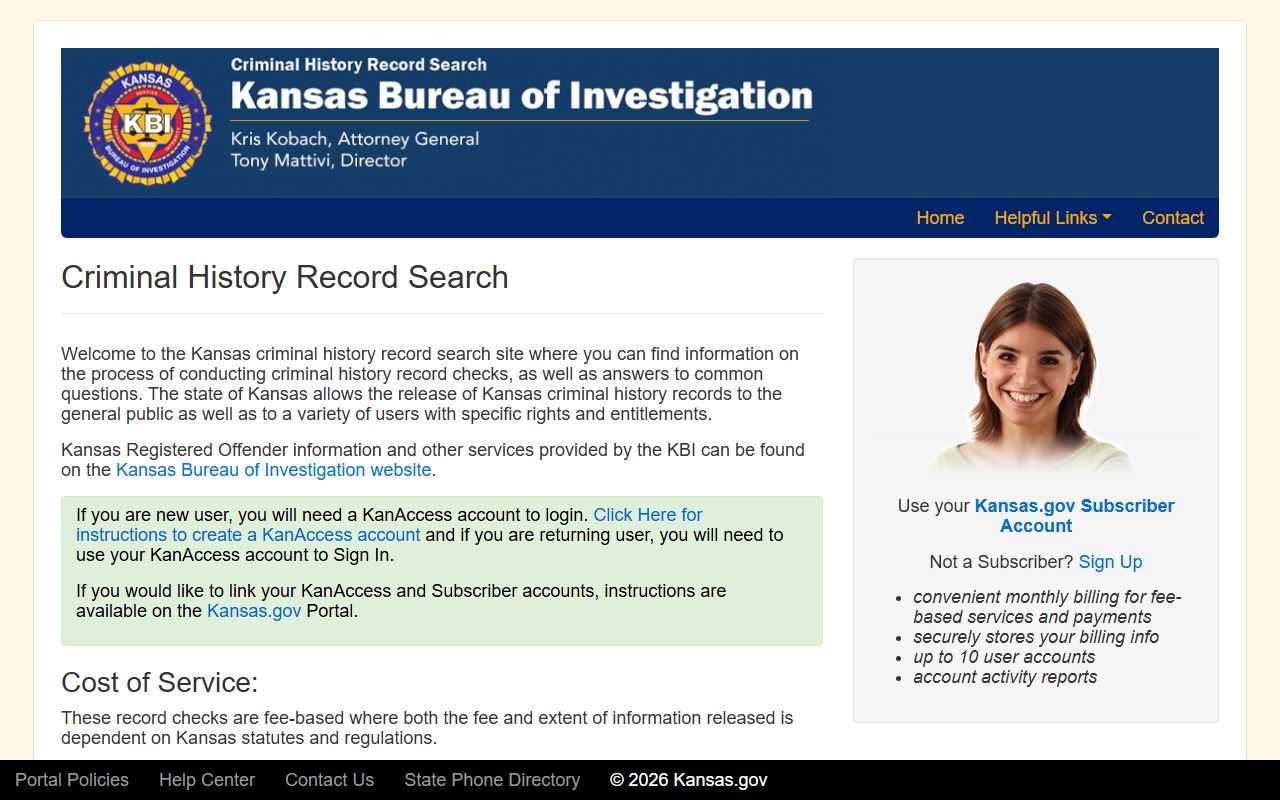
Use the KBI channel when a statewide criminal-history search is needed, then verify local charge details against the Washington County court record.
The KBI record-check details explain exclusions and mail options for users who cannot or should not rely on the web portal alone.
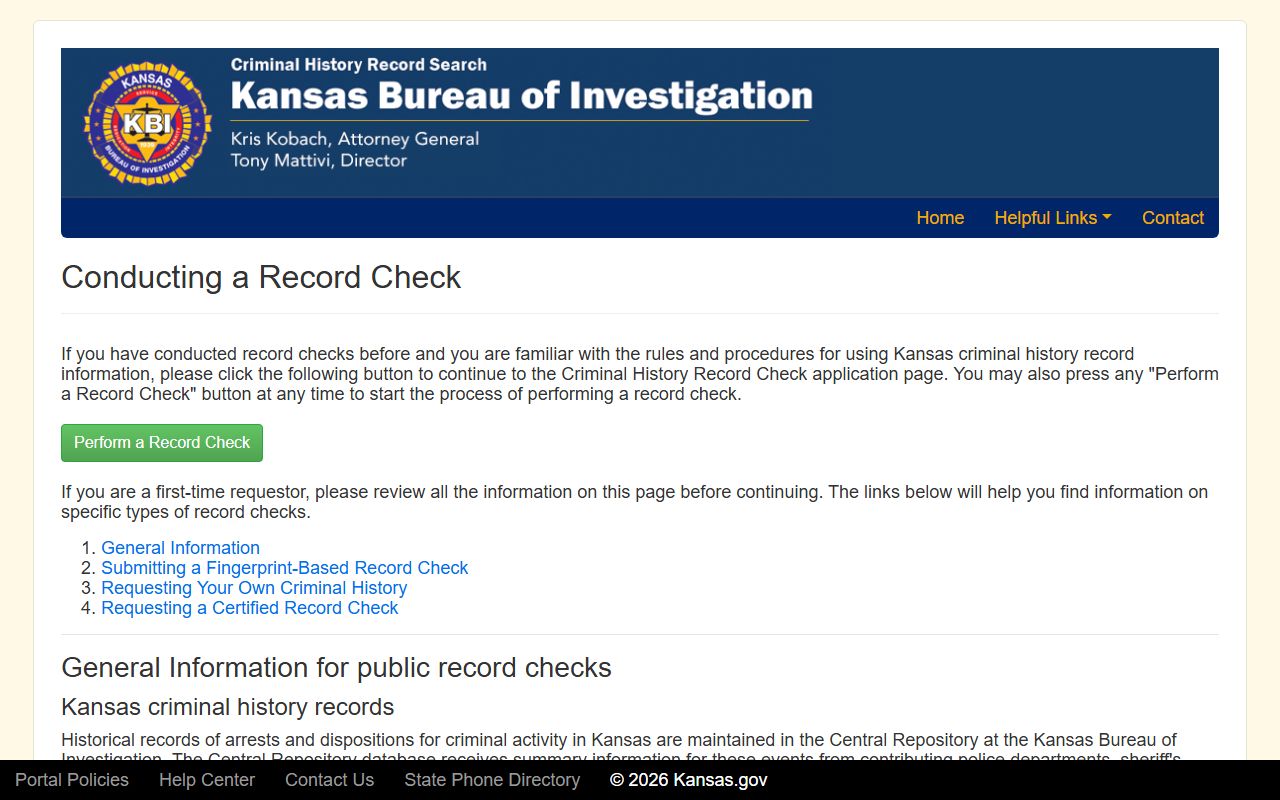
Those limits matter because a name-based search can miss or confuse people with similar names, and fingerprint-based identity is stronger for final identification.
Charge Codes and Severity
Washington County charge records may list a charge description, statute, severity, classification, arresting agency, prosecutor, bond, plea, conviction, and sentence. Kansas cases can involve felonies, misdemeanors, traffic offenses, fish and game offenses, juvenile matters, and care or treatment proceedings. The charge code points to the alleged law violation, while the severity or classification helps show how serious the accusation is.
One arrest can produce several charge counts. Each count should be checked separately because one count may be dismissed and another may result in conviction. Court costs, fines, restitution, bond, payment status, probation, and revocation entries may also appear later in the same criminal case. If a legal decision depends on a charge code or severity level, request the actual charging document or journal entry from the clerk.
Sealed and Expunged Charges
Some Washington County arrest records and charge records are not open to the general public. Juvenile records, sealed cases, expunged records, adoption records, medical or care and treatment matters, and personal identifiers may be restricted. Under K.S.A. 21-6614, Kansas provides a process for expungement of certain convictions, arrest records, and diversions.
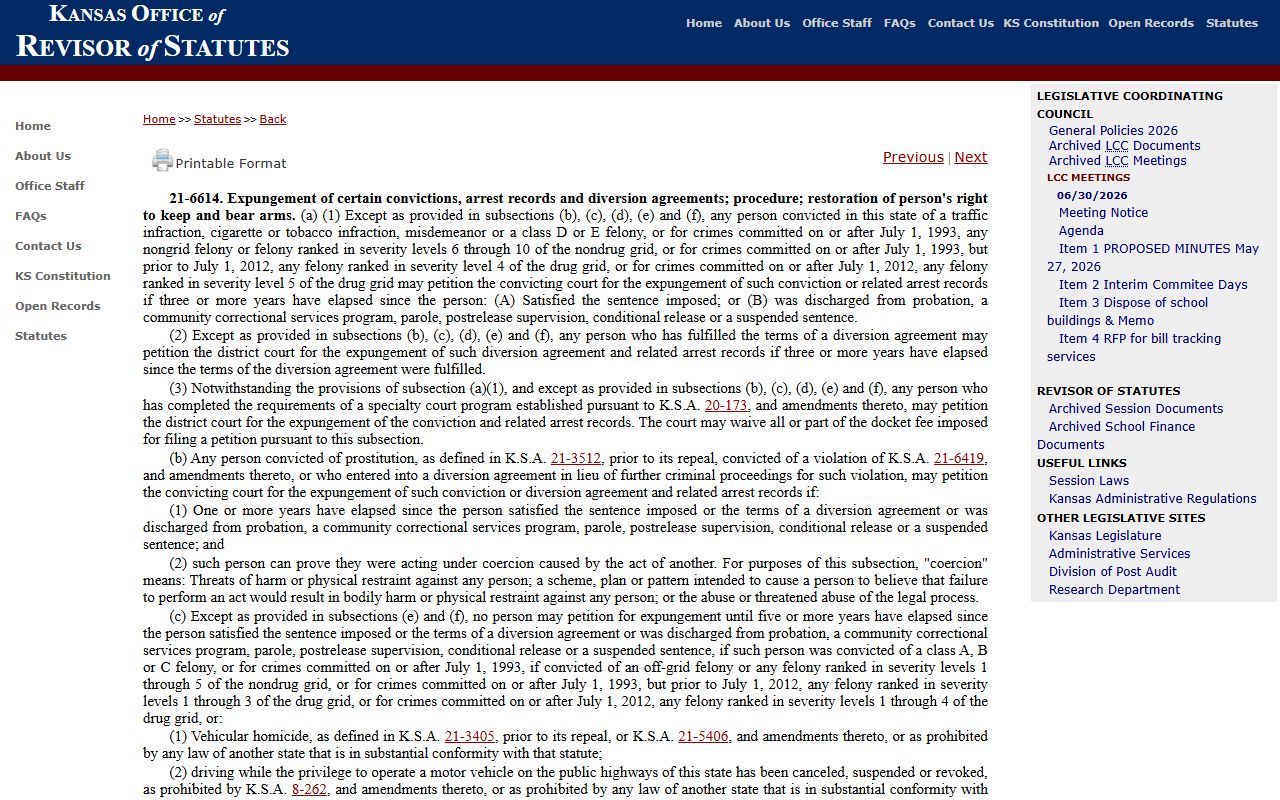
For a Washington County case, the petition normally returns to the district court that handled the arrest record, conviction, or diversion.
| Point | Sealed | Expunged |
|---|---|---|
| Public Access | Closed from ordinary public inspection. | Public access is limited after the court grants relief. |
| Common Source | Judge's order, statute, or court rule. | Petition under the applicable Kansas expungement law. |
| Local Filing | Ask the district court clerk what motion is needed. | Identify case number, charge, disposition, completion date, and waiting period. |
Washington County Charging Office
The Washington County Attorney's Office is the local prosecution office for offenses occurring in the county.
The office's role explains why arrest reports, jail custody, and court charges can live in different places even when they arise from the same incident.
Washington County Attorney's Office
209 C Street
Washington, KS 66968
785-325-2149
Monday-Friday, 8 a.m.-5 p.m.
Washington County Sheriff's Office
301 B Street
Washington, KS 66968
785-325-2293
24/7/365 coverage
Restricted Washington County Charge Records
Restrictions can apply before or after a charge is filed. Juvenile offender, Child in Need of Care, and juvenile intake records can be confidential. Ongoing investigations may limit sheriff report release. Sealed court cases do not appear in ordinary public search. Expunged arrests, diversions, or convictions may have reduced public access. Social Security numbers, financial account numbers, protected addresses, dates of birth, minor names, and medical or mental-health data may be redacted.
The practical public-access rule is to use the sheriff for arrest reports, the jail for current custody questions, CaseSearch for public court charges, the Clerk of the District Court for copies, and KBI for statewide criminal-history checks. Those channels overlap, but they do not replace one another.